
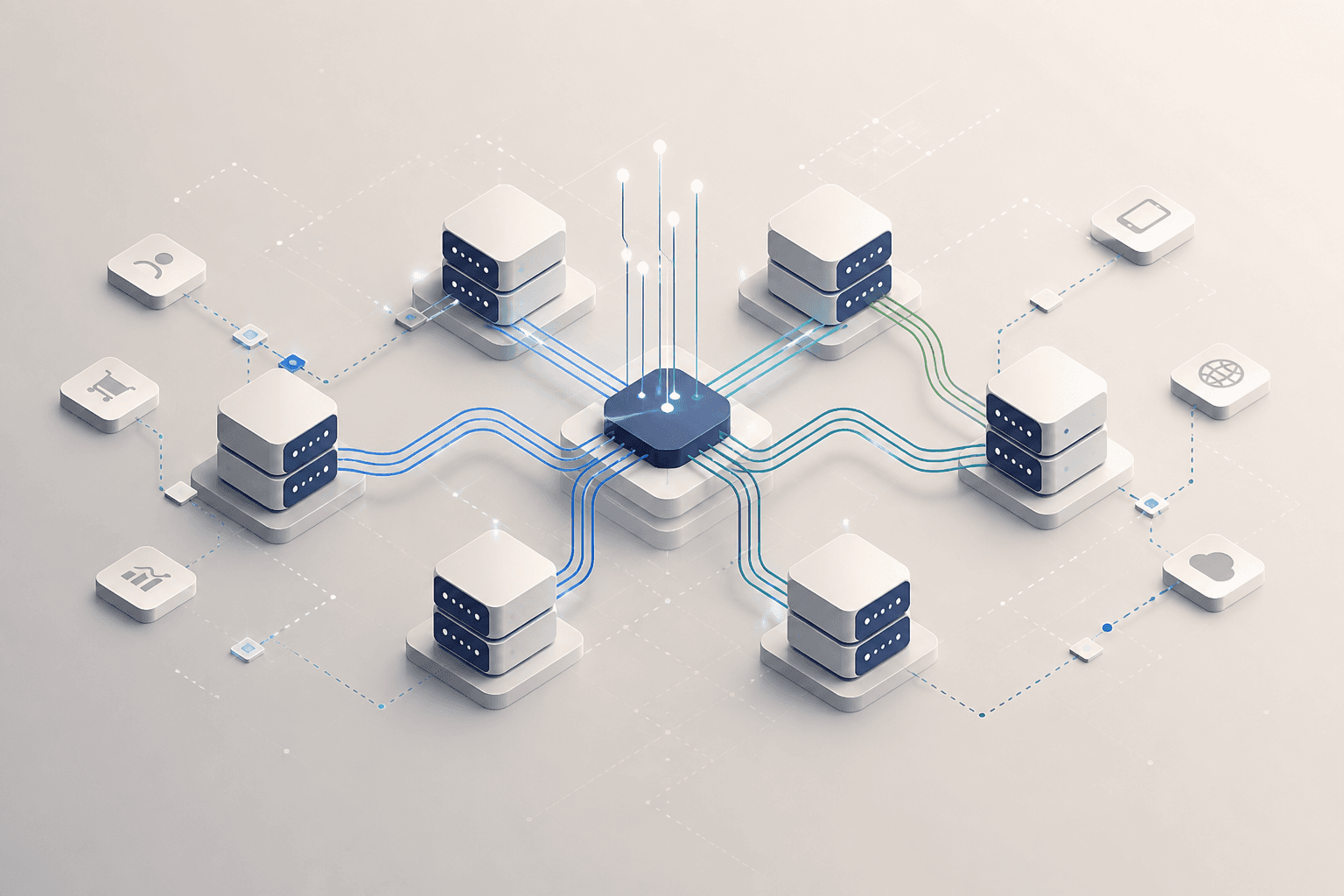
Most products do not fail because the first version of the API was wrong. They strain when usage grows, when new clients depend on subtle behavior, and when the same endpoints serve mobile, partners, and internal tools at once. Sustainable growth means treating your API as a product: clear contracts, predictable performance, and changes that do not surprise consumers.
At Brixol we work with teams who are past the prototype stage and need systems that stay fast under real load. This article summarizes practical patterns we apply on engagements—not theory for its own sake, but habits that pay off when traffic charts start climbing.
Start with explicit contracts and versioning
Treat breaking changes as a release-management problem, not a last-minute discovery. Whether you prefer URL versioning, headers, or a GraphQL schema with deprecation policies, the goal is the same: consumers should know what is stable, what is evolving, and what will be removed with notice.
OpenAPI (or equivalent) documents should live next to the code they describe and be checked in CI. Generated clients and server stubs reduce drift between documentation and behavior.
Performance: measure before you cache
Caching and read replicas help, but blind caching adds inconsistency and debugging cost. We start with tracing and metrics: p95 latency per route, database query counts, and payload sizes.
Pagination defaults matter. Cursor-based pagination scales better than large offset pages for feeds and admin tables.
- Instrument every critical path before tuning; guessing wastes time.
- Cap page sizes and document maximums so clients cannot accidentally DOS your DB.
- Use timeouts and bulkheads between services so one slow dependency does not tie up the whole pool.
Reliability under partial failure
Retries with idempotency keys belong in the design of mutating endpoints, not as an afterthought in mobile apps alone.
Rate limiting and fair queuing protect you from misconfigured clients and bad actors.
How your team ships changes
Feature flags, canary deploys, and contract tests against consumer fixtures catch regressions before they hit everyone.
If you are planning a growth phase and want a second opinion on architecture, capacity, or API design, reach out via our contact page.
/Keep reading
Related articles

Production RAG pipelines: lessons from real deployments
Retrieval quality, evaluation, and ops practices that keep LLM features reliable after launch.
Read article
What is agentic AI and when should your business use it?
A practical guide to autonomous AI agents—what they do well, where they fall short, and how to evaluate fit for your operations.
Read article
How to choose a software development agency
What to evaluate before you sign—delivery model, technical depth, communication, and fit for long-term product work.
Read article